




FROM 2026 TO 2030: POCHETTINO NOW HAS TIME TO BUILD AN AMERICAN TEAM
U.S. Soccer extends Mauricio Pochettino through 2030 after a successful World Cup run—and gives him a broader role in shaping the future of American soccer.
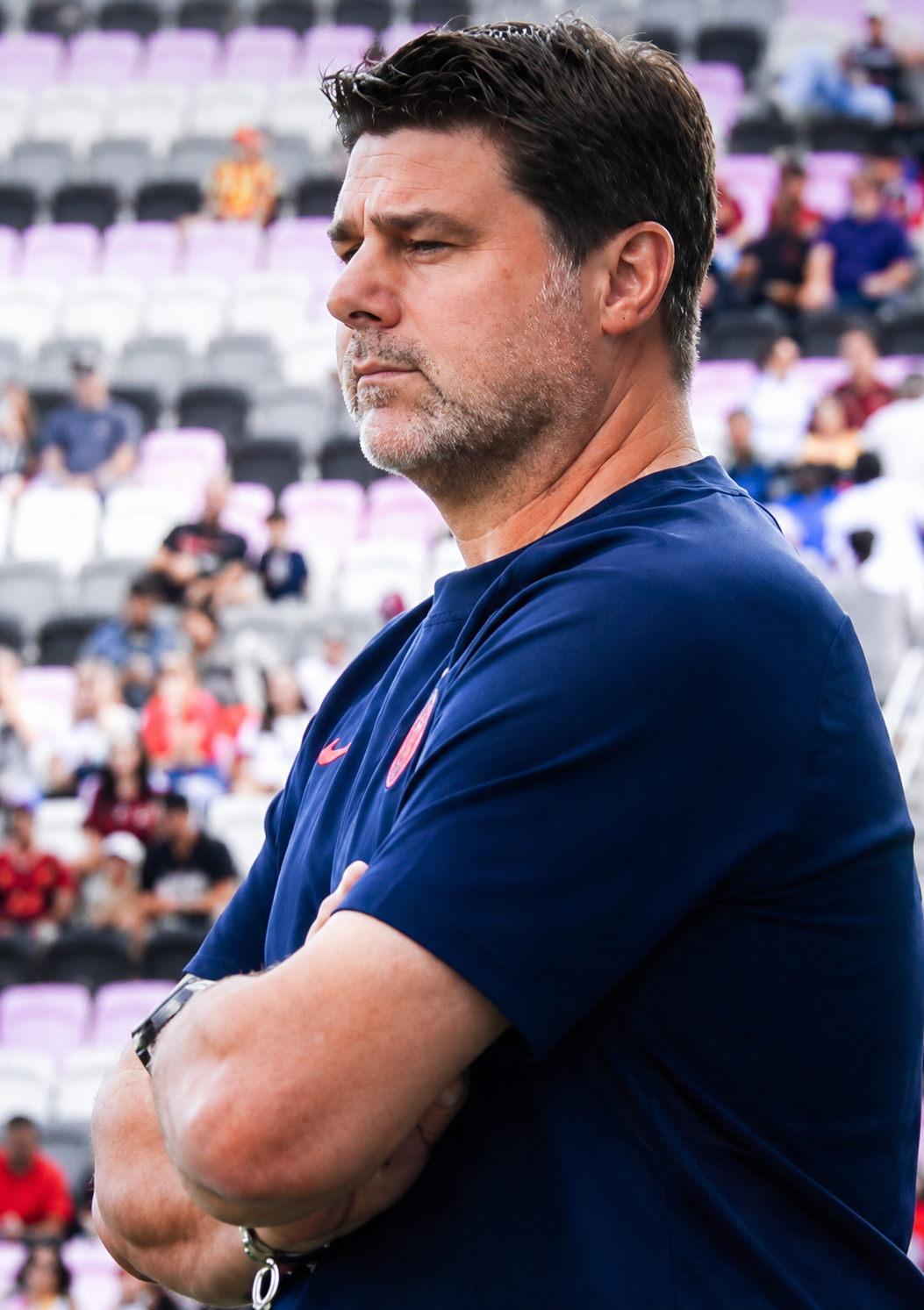
Mauricio Pochettino is staying.
U.S. Soccer and the U.S. Men’s National Team head coach have agreed to a new contract through 2030, giving Pochettino and his technical staff something they never had when they arrived in 2024: a complete four-year World Cup cycle.
And this time, the assignment goes beyond the USMNT.
Under the new agreement, Pochettino and his staff will also advise and support U.S. Soccer in areas including the National Team pathway, youth soccer, coaching education, professional league collaboration and other technical aspects of the American game.
The extension represents a significant vote of confidence following a 2026 World Cup in which Pochettino’s young U.S. team delivered when the pressure was highest.
But it also raises a bigger question: –
FROM A TWO-YEAR RUSH TO A FOUR-YEAR PROJECT
Pochettino’s first USMNT contract was always unusual. When U.S. Soccer hired him in 2024 following the team’s disappointing group-stage exit at Copa América, approximately two years remained before the United States would help host the 2026 FIFA World Cup. That meant Pochettino inherited a team searching for identity and confidence while facing an unforgiving deadline.
There was no conventional four-year World Cup cycle. There was little time for experimentation. And the results initially reflected those difficulties. The USMNT produced inconsistent performances and suffered defeats against stronger international opponents including Türkiye, Switzerland, Belgium, Portugal and Germany.
At other moments, however, Pochettino showed what the team could become, producing victories against opponents including Japan, Uruguay, Senegal and Paraguay. Then came the World Cup.

THE WORLD CUP CHANGED THE CONVERSATION
The United States delivered convincing victories over Paraguay and Australia before producing one of its most resilient performances against Bosnia and Herzegovina in the Round of 32. Playing with 10 men in an elimination match, the Americans still found a way to score and earned a 2-0 shutout victory. The result gave U.S. supporters something they had not experienced in nearly a quarter century: a realistic opportunity to see their national team return to a World Cup quarterfinal.
The run eventually ended against an experienced opponent from the Low Countries, but the tournament demonstrated something U.S. Soccer apparently considered important enough to continue developing. The players believed. They competed. And they increasingly looked like a team.
POCHETTINO BUILT MORE THAN A LINEUP
Pochettino’s impact can also be measured by how extensively he explored the American player pool. Since taking charge in October 2024, 62 players from 16 leagues in 12 countries earned caps under him. Twenty-three different players contributed to the 53 goals scored during his tenure.
Several players who received their first international opportunities under Pochettino eventually became World Cup players. Max Arfsten, Alex Freeman and Matt Freese earned their first USMNT caps under the Argentine and later made the 2026 World Cup roster. Sebastian Berhalter and Chris Brady followed the same path from first caps to World Cup selection.
That willingness to identify and develop players is particularly relevant now that Pochettino’s responsibilities will extend beyond the senior National Team.
“Mauricio has built a culture where players trust the group, trust the process and trust each other,” U.S. Soccer President Cindy Parlow Cone said in announcing the extension.
That culture may prove as important as any tactical system over the next four years.

A NATIONAL TEAM NEEDS MORE THAN TALENT
The challenge facing Pochettino now is different from the one he inherited in 2024. Selecting talented players is one thing. Building a national team capable of consistently competing against the world’s strongest soccer countries is another.
National-team players spend most of their year separated, playing for different clubs, in different leagues and sometimes different countries. International windows provide limited opportunities to develop the understanding and chemistry that club teams can build every day. That makes continuity valuable.
Players must learn one another’s tendencies. They must understand movements before they happen, trust teammates under pressure and develop the collective instincts that turn talented individuals into a functioning team.
Pochettino now has four years to develop that understanding instead of approximately two. And U.S. Soccer wants his influence to reach even further.
A BIGGER ROLE IN AMERICAN SOCCER
U.S. Soccer CEO and Secretary General JT Batson described the agreement as an opportunity to build both on the progress of the USMNT and the broader momentum surrounding soccer in the United States.
Pochettino has embraced that expanded responsibility. – “The passion we experienced from the fans throughout the World Cup only strengthened our belief in what is possible here,” he said.
The coach also said his staff wants to bring its experience to more areas of U.S. Soccer, strengthen pathways for players, coaches and teams and create an impact that extends “beyond results on the field.” – That may ultimately be the most significant part of the new agreement.
Pochettino arrived in the United States as a highly accomplished European club manager taking his first international coaching job. He now begins his second USMNT contract with something entirely different: experience with the American player pool, an established technical staff, stronger relationships with his players and a connection with supporters that became increasingly visible during the World Cup. And now he has time.
The first contract was about preparing the USMNT for 2026. The next four years will determine whether Pochettino can do something considerably harder: build an American team with a World Cup mentality.